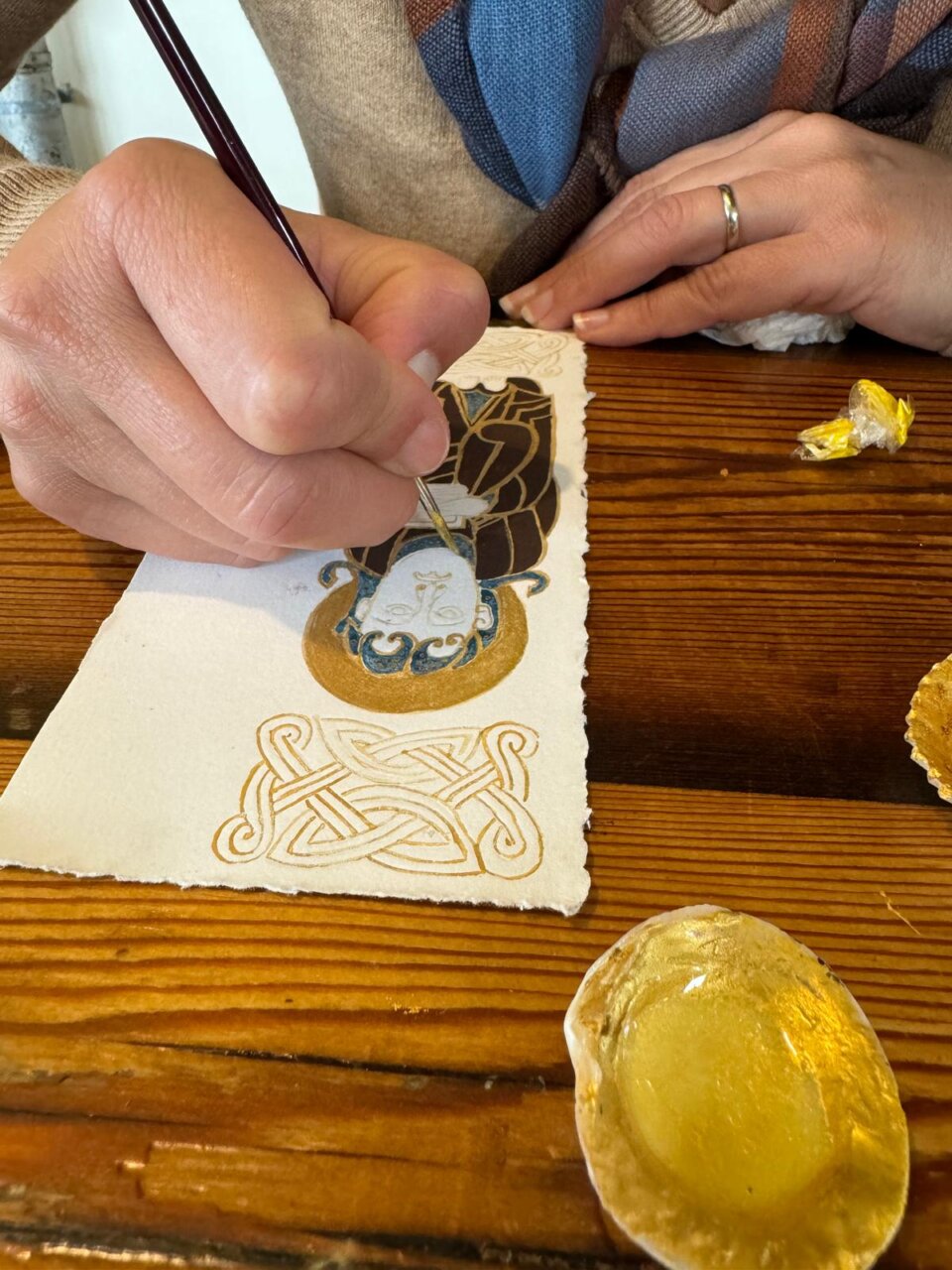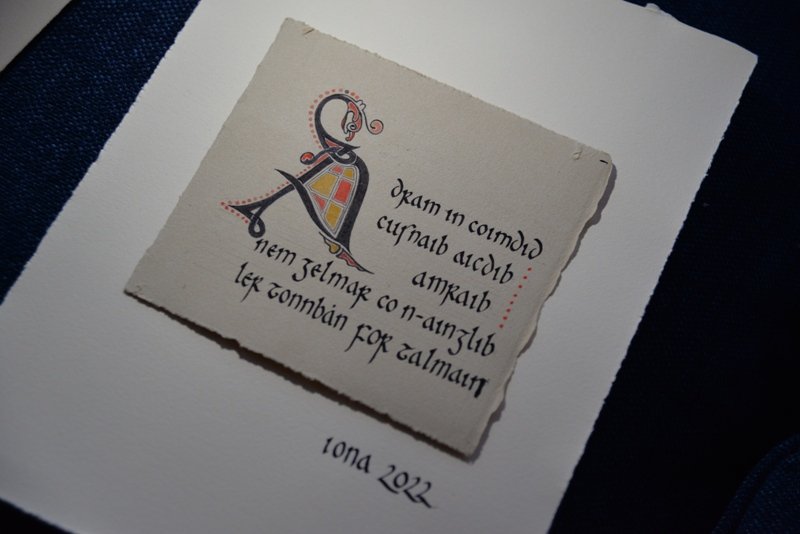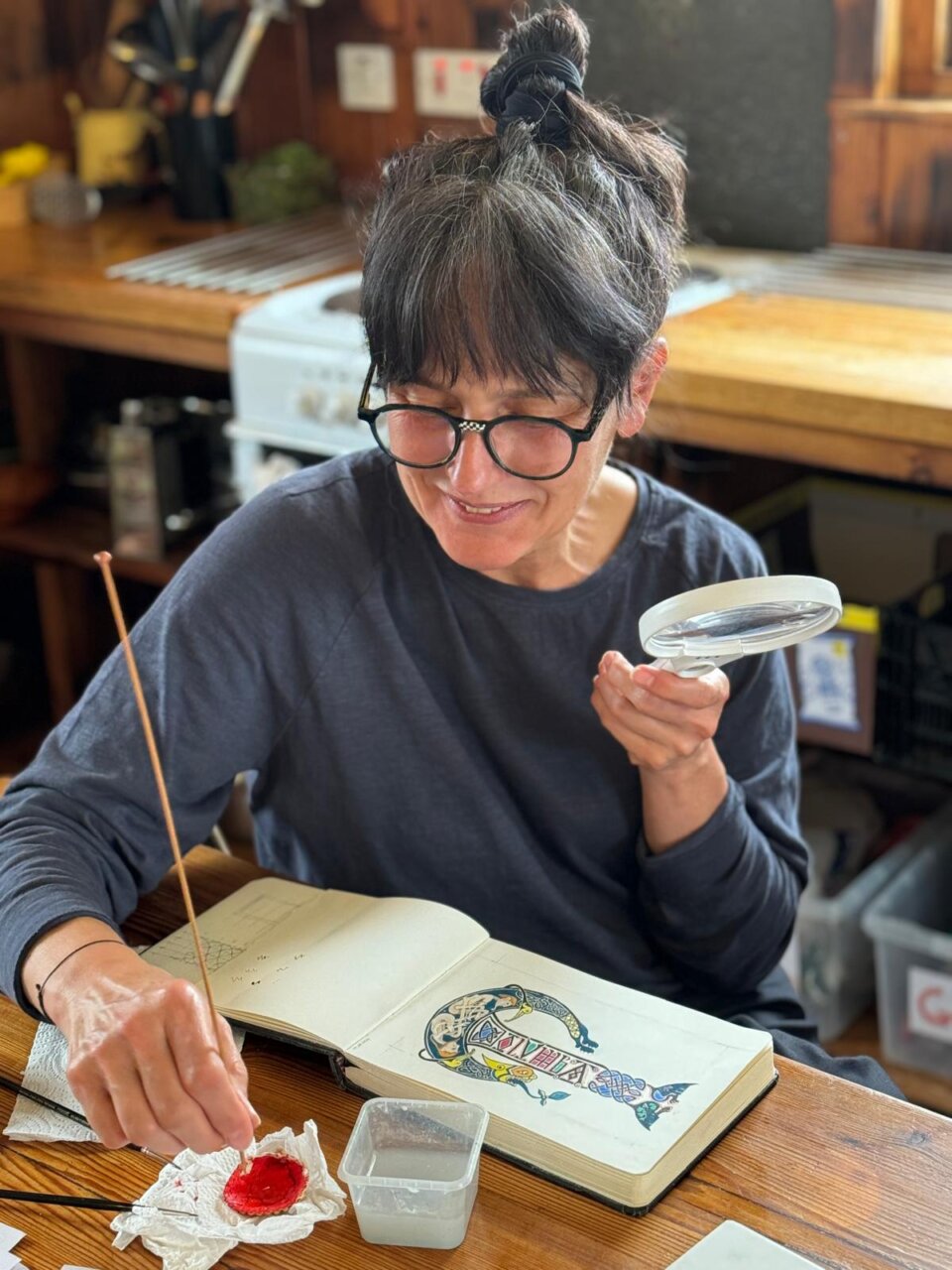

WORKSHOPS IN SCOTLAND ON THE IONA ISLE
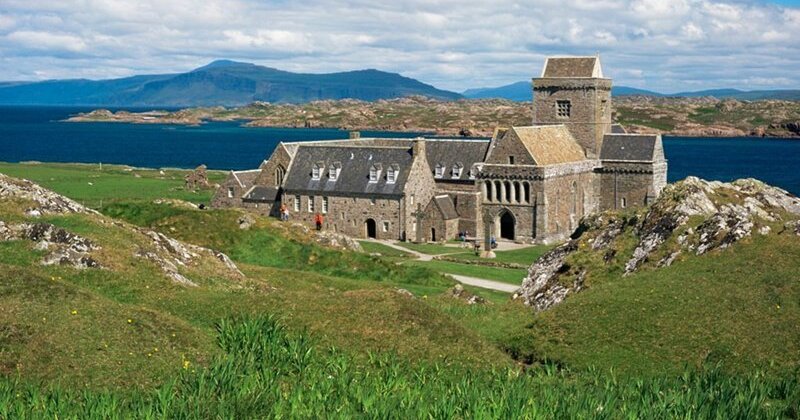
One of the most unique places we were able to visit with our travelling Scriptorium was Iona, a small island off the coast of Mull, on the west coast of Scotland, home to a famous monastery.
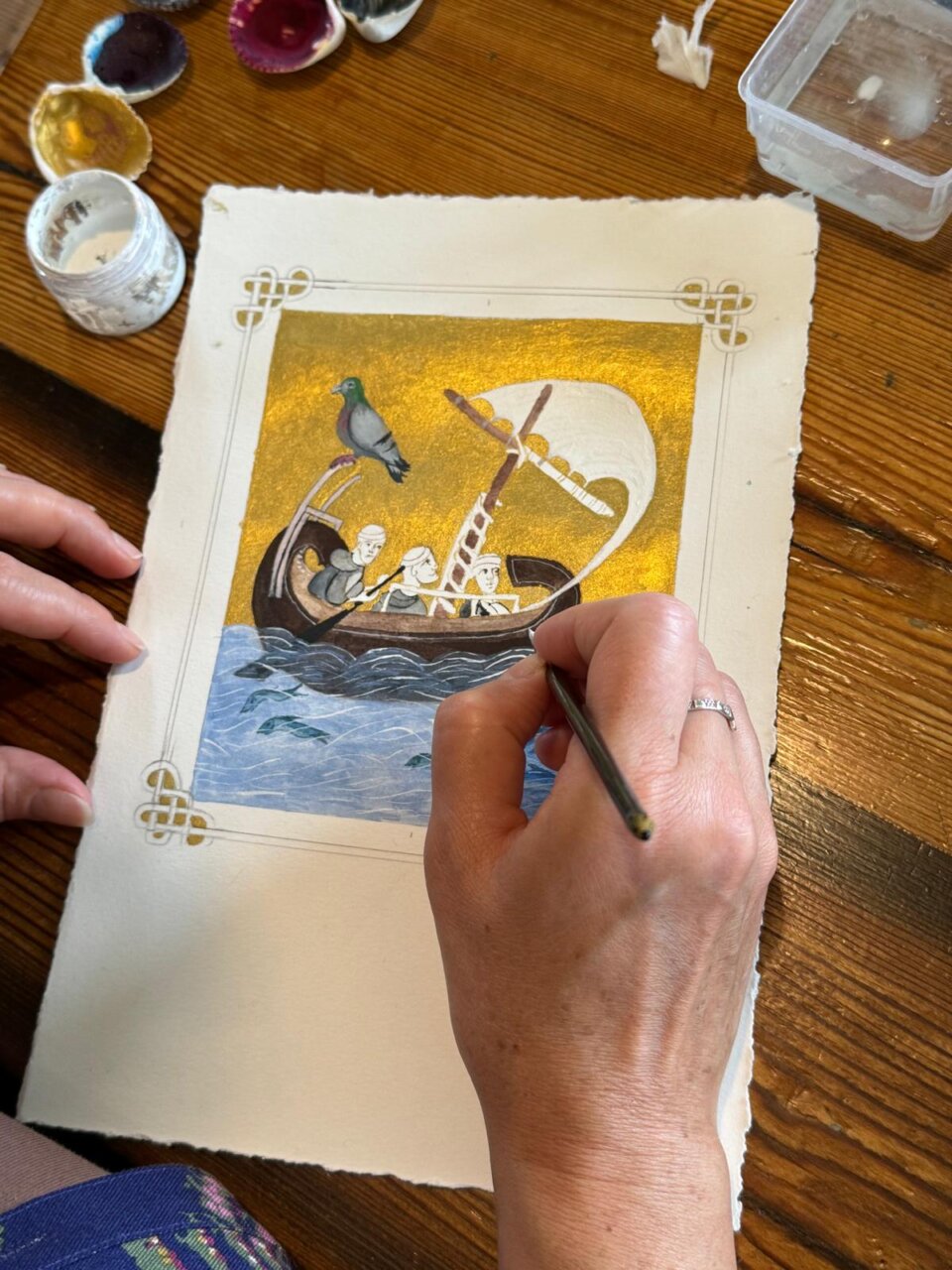
It was one of the oldest and most important Christian religious centres in Western Europe. Founded on the island, it was the first of 53 monasteries established in subsequent years on the initiative of St Columba. The monastery was founded in 563, when Columba and his companions sailed to the island from Ireland. A scriptorium had been in operation there since at least the 8th century, where, among other works, the famous, magnificently decorated Book of Kells was produced, and where the local annals were kept (the original has been lost, but the section from the 7th/8th century was incorporated into the Annals of Ulster).
Towards the end of the 7th century, Abbot Adomnán served at the monastery; he left behind a hagiography of St Columbanus, as well as a book describing holy sites in the Middle East. In the 7th and 8th centuries, the monastery’s prestige grew to such an extent that at least two Irish rulers, Niall Frossach (King of Tara, who died in 778) and Artgal (King of Connacht, who died in 791), decided to spend their final years as monks in the community on Iona.
Towards the end of the 8th century, the monastery’s peaceful development was threatened by raids from Norwegian Vikings, lured by the easy pickings and rich spoils found in the coastal churches and monasteries. Iona suffered plunder and destruction in 795, 802, 806 and 825, and again in the 10th century. Despite this, the monastery survived mainly thanks to the partial flight of the monks to Kells in Ireland, where land was purchased in 804 and a branch of the monastery was established by 814. The surviving valuables were moved there, and it was there that the abbots resided for a long time and where the monks from Iona took refuge in times of danger.
Today, an ecumenical community operates on Iona, on the site of the former monastery.
The island is just 1.5 miles long and 3 miles wide, and is visited by 130,000 tourists every year – 1,083 times more than its population (Iona has 120 inhabitants).
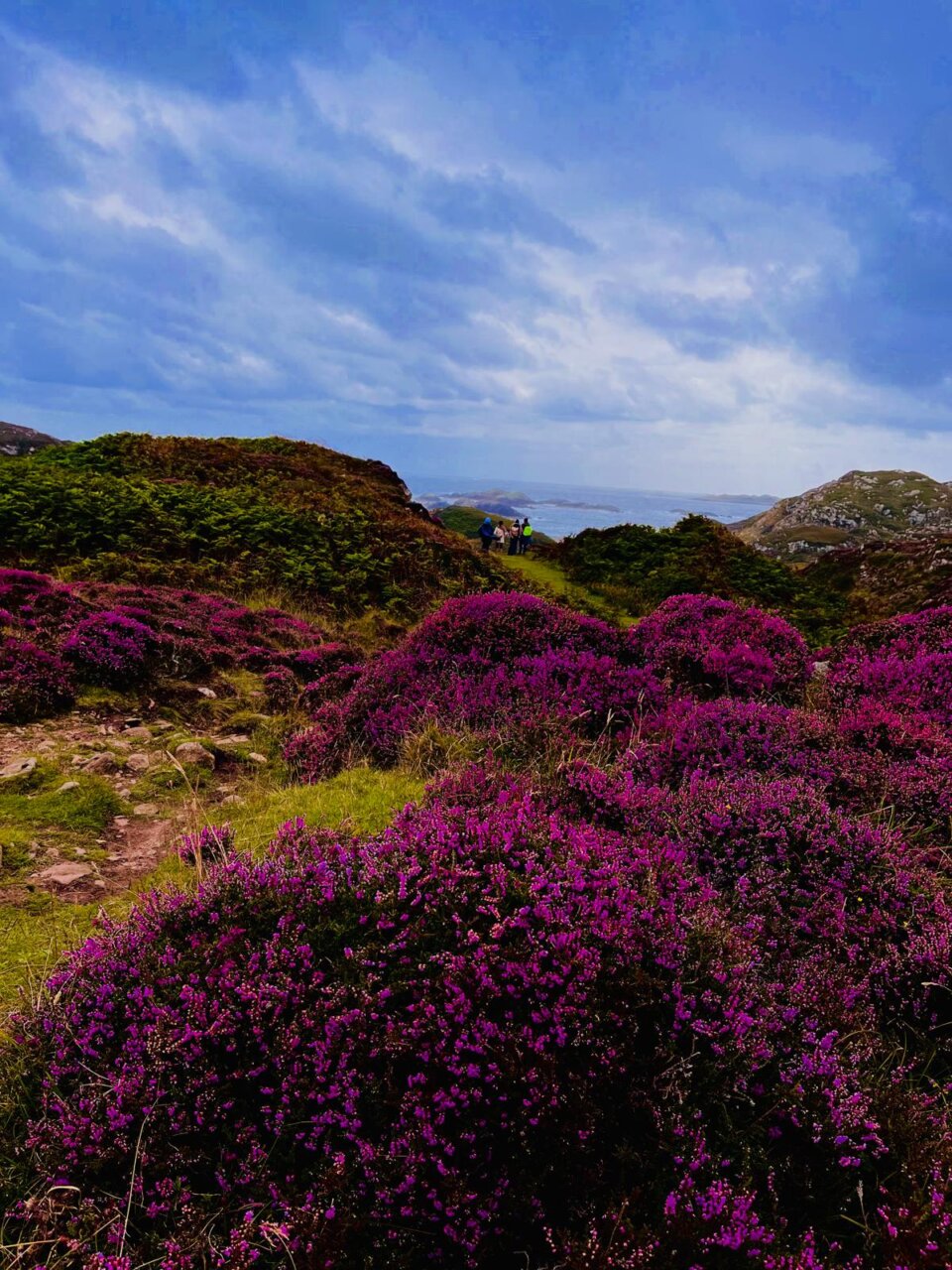
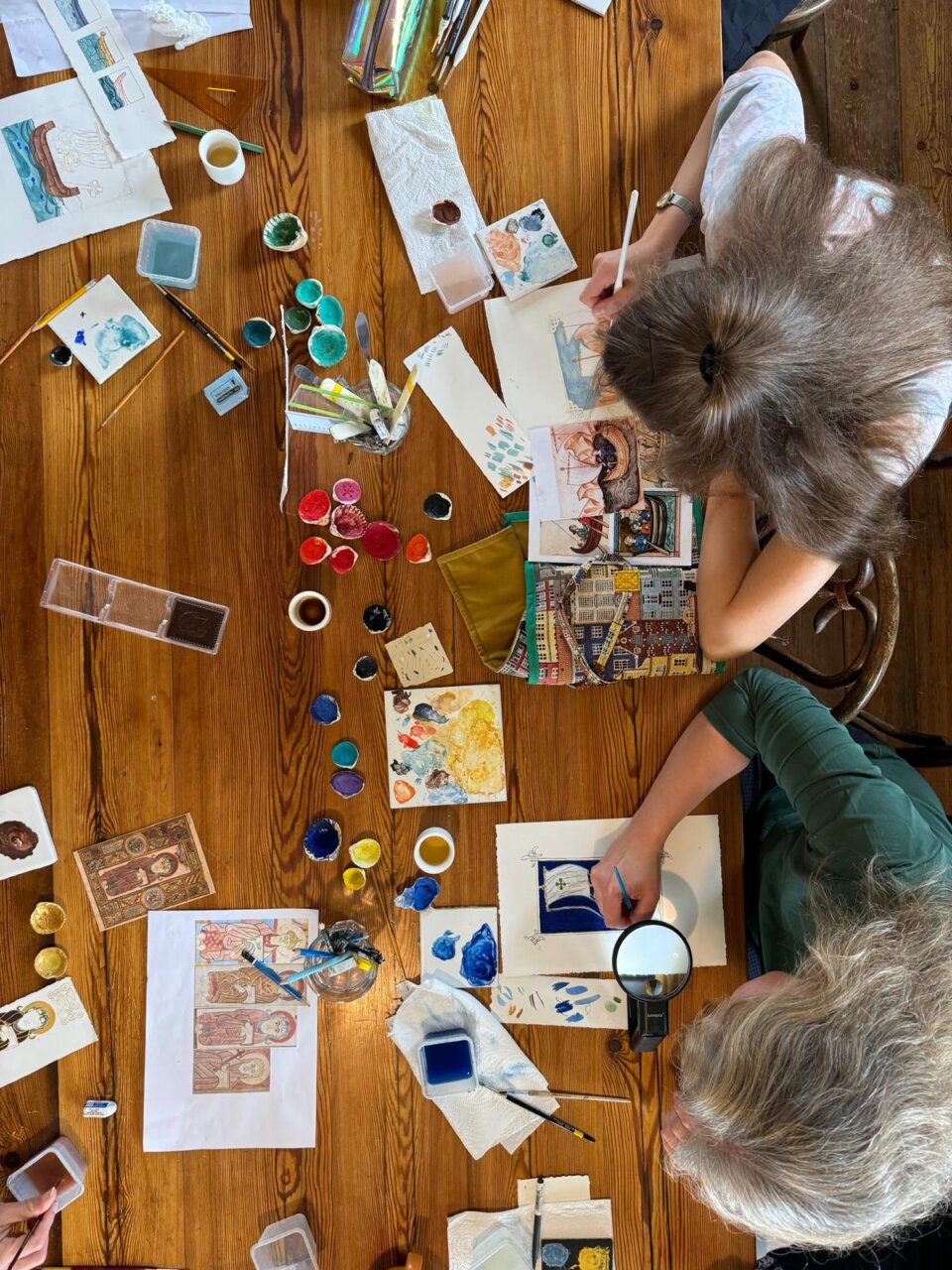
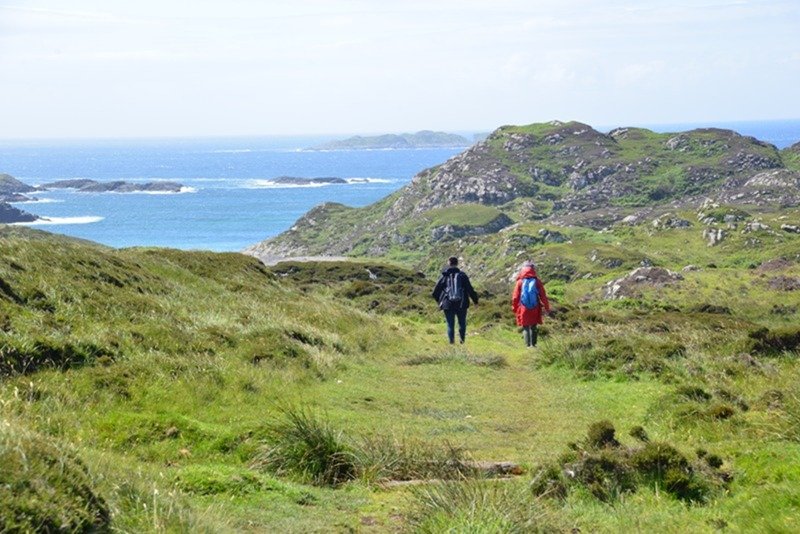
For this reason, holding workshops in such a unique place is not only a way to connect with the fascinating history of the site, but also a wonderful opportunity to unwind and relax – walks along the coast, chats over a cup of tea, and even a knitting circle.
So far, three workshops have taken place on Iona, and we hope to be able to visit again in the future.
 back
back