
WORKSHOPS IN SPAIN – the monasteries of Suso and Yuso
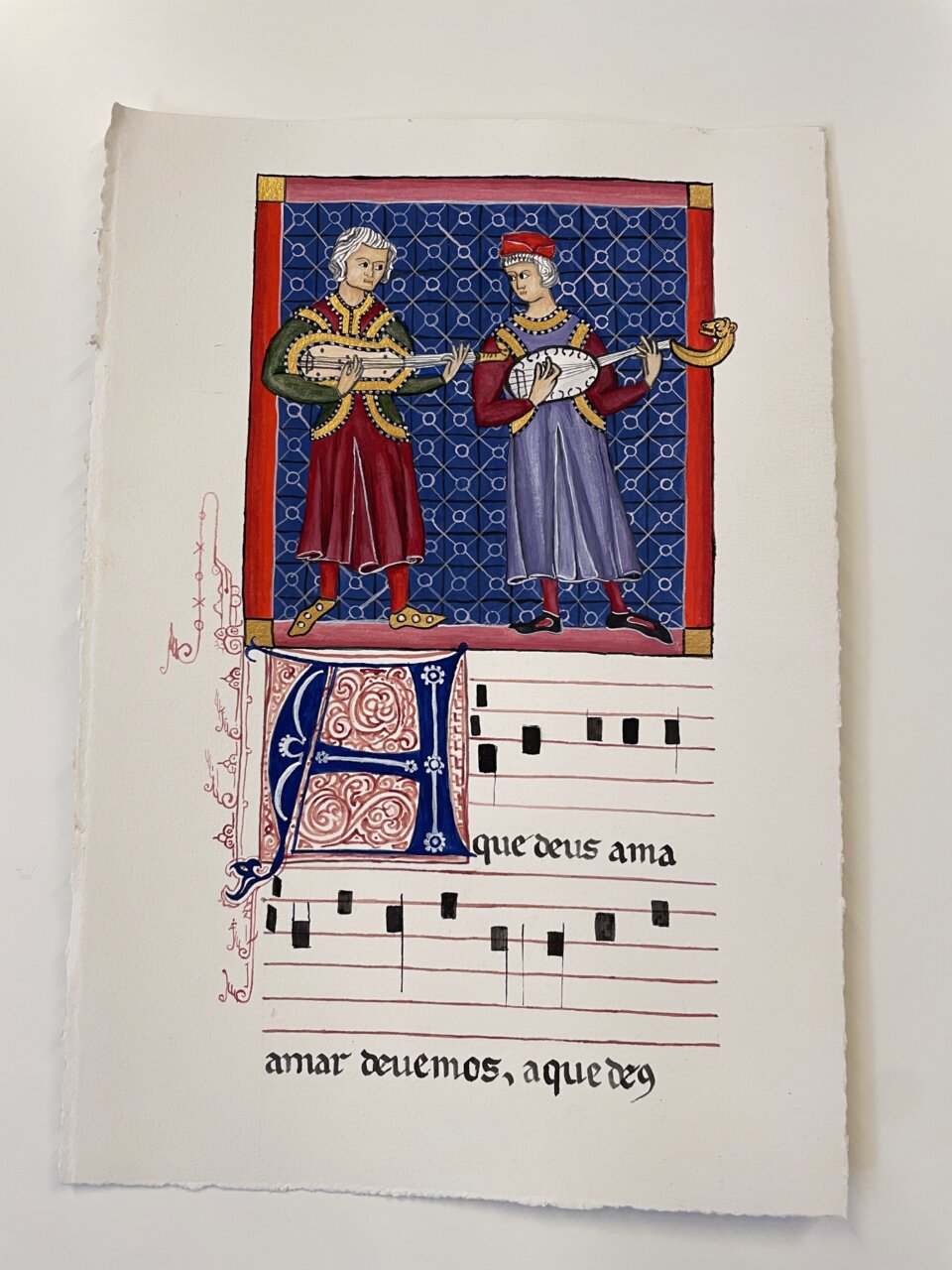
Workshops held in monasteries always have a special character, but the greater the role a particular place has played in the history of literature, the more we feel the thread connecting us to the past. That is why I found it particularly exciting to be invited to lead a workshop at San Millán de la Cogolla in Spain, home to two twin monasteries: Suso (the upper monastery) dating from the 6th century and Yuso (the lower monastery) from the 11th century. Both were inscribed on the UNESCO World Heritage List in 1997.
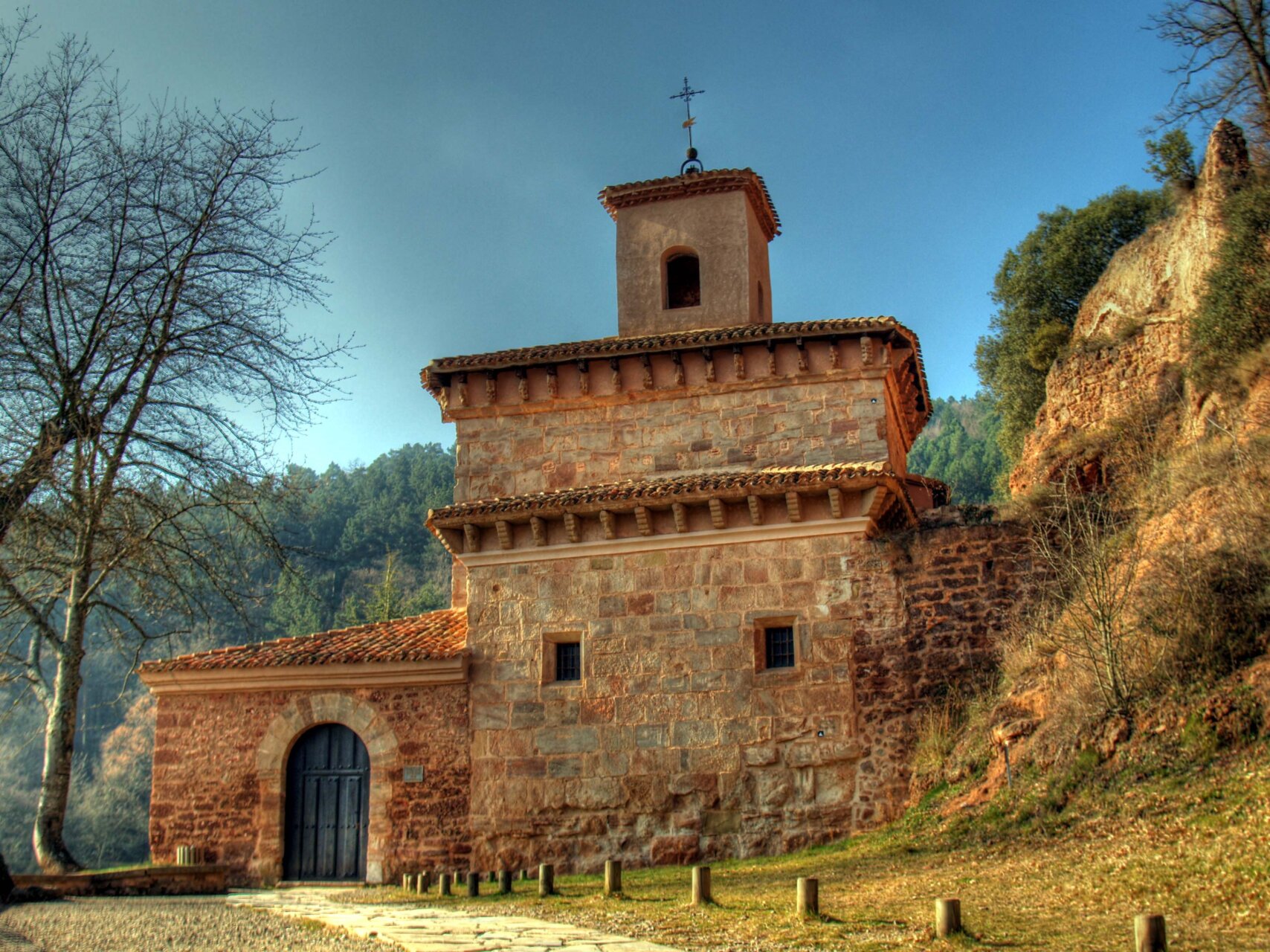
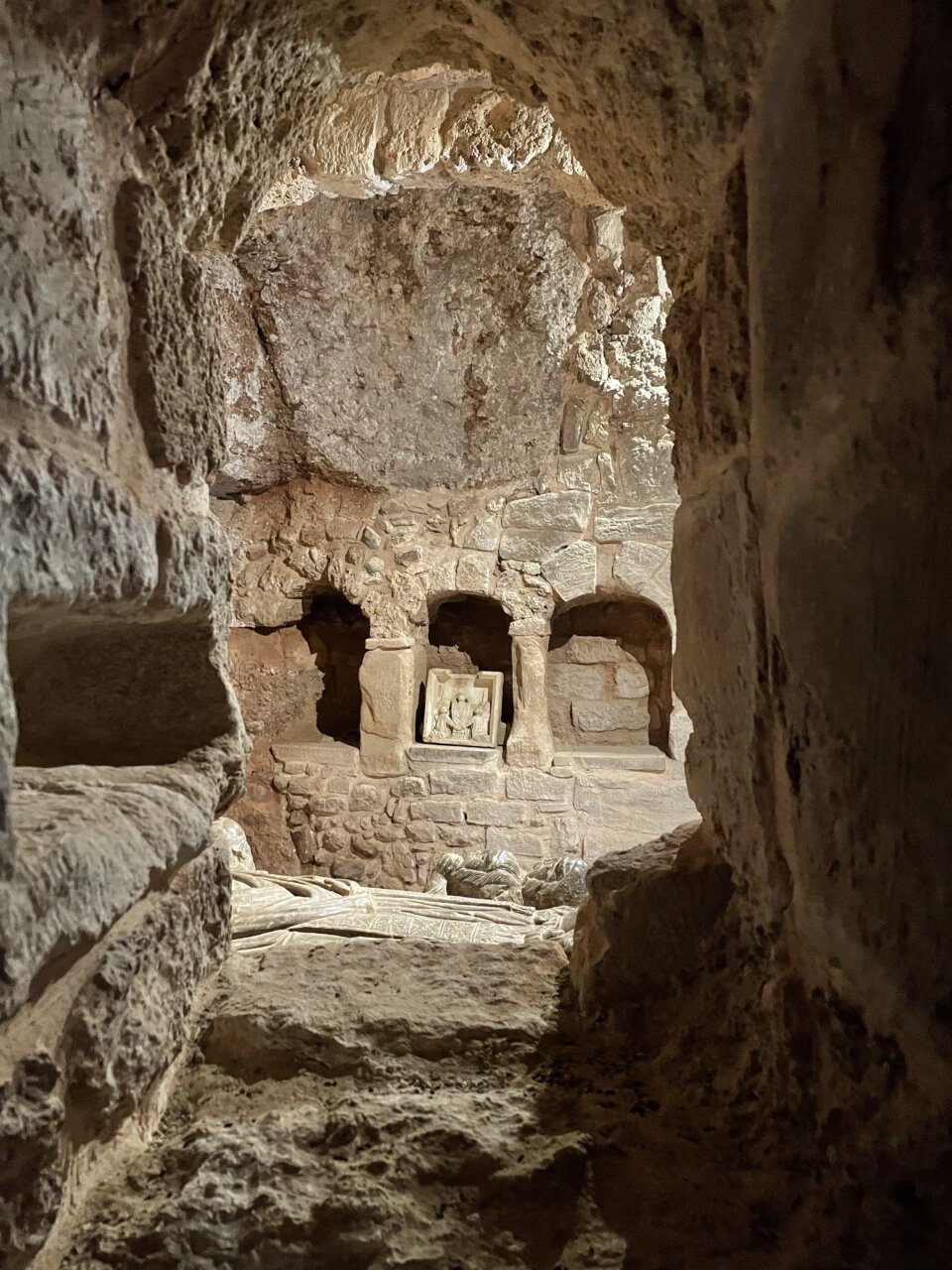
The cenobium of the ancient monastery of Suso dates back to the Visigothic period and was built in 550, making it one of the oldest in Spain. According to tradition, the monastery was founded on the site of the hermitage of St Emilian (San Millán). In the 10th century, it was inhabited by Mozarabic monks, and the horseshoe arch on the entrance gate and the chapels date from this period. Importantly for us, the Suso monastery witnessed the first Castilian words, as well as the first poems in that language. In 964, the first encyclopaedic dictionary on the Iberian Peninsula was compiled: the Codex Emilianense 46 – alongside the Latin text, glosses were added in the medieval versions of Castilian and Basque. In the 13th century, Gonzalo de Berceo wrote the first poems in Spanish (he was buried in the Romanesque chapel). In the UNESCO description, the monastery is even referred to as ‘the birthplace of the written and spoken modern Spanish language’. The monastery and scriptorium continued to operate even during the Muslim period. In the 11th century, Benedictine monks settled here.
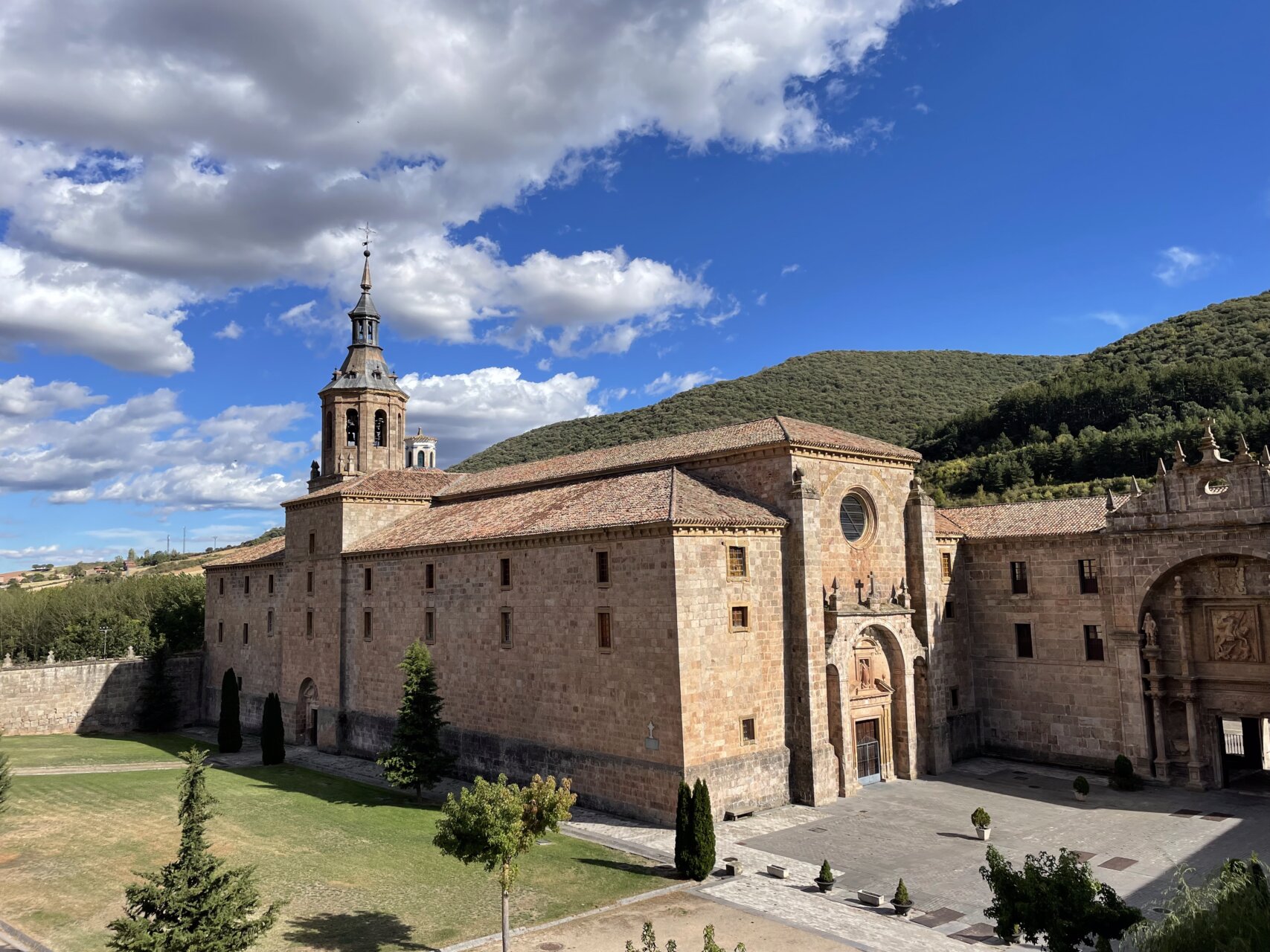
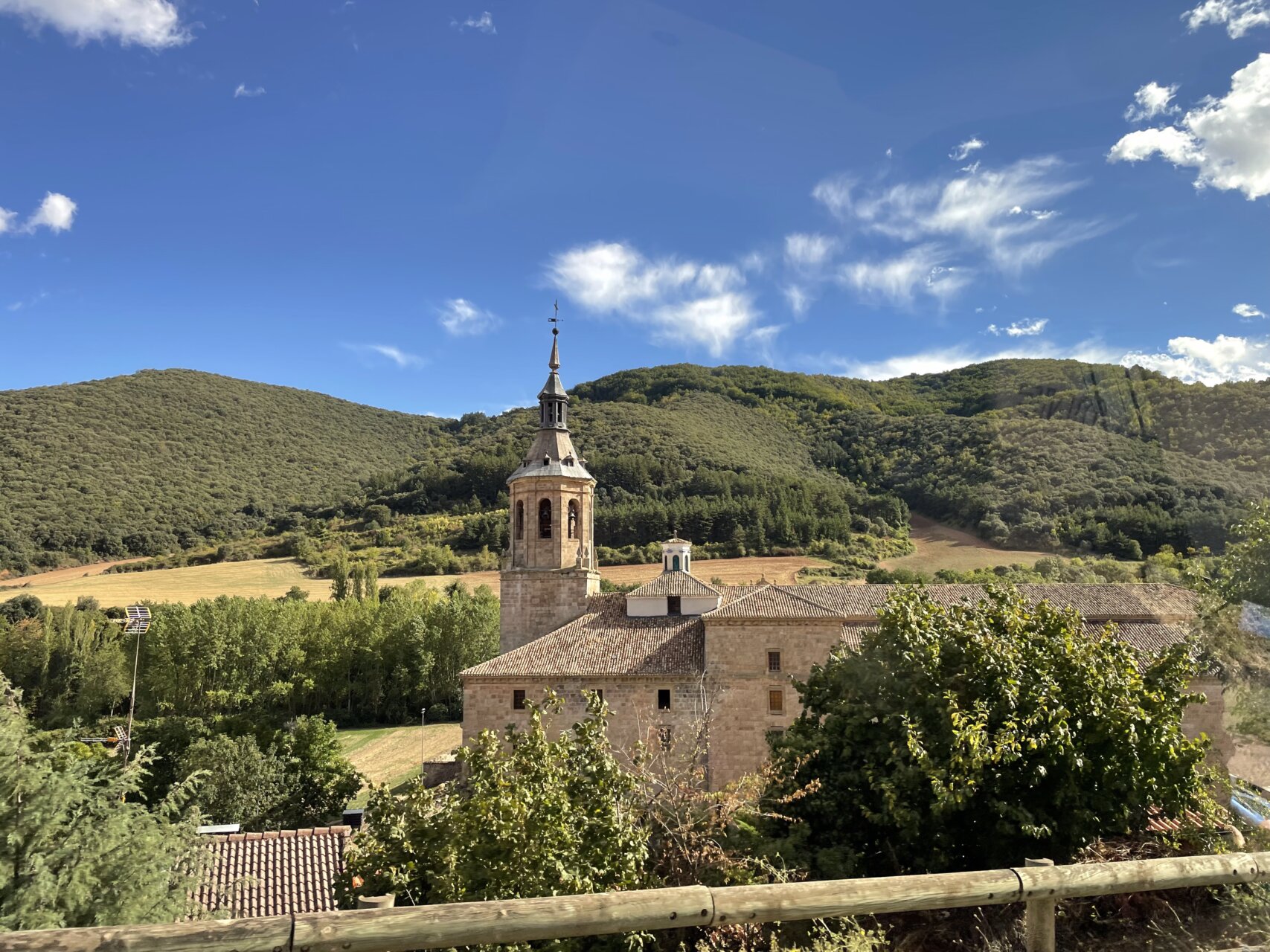
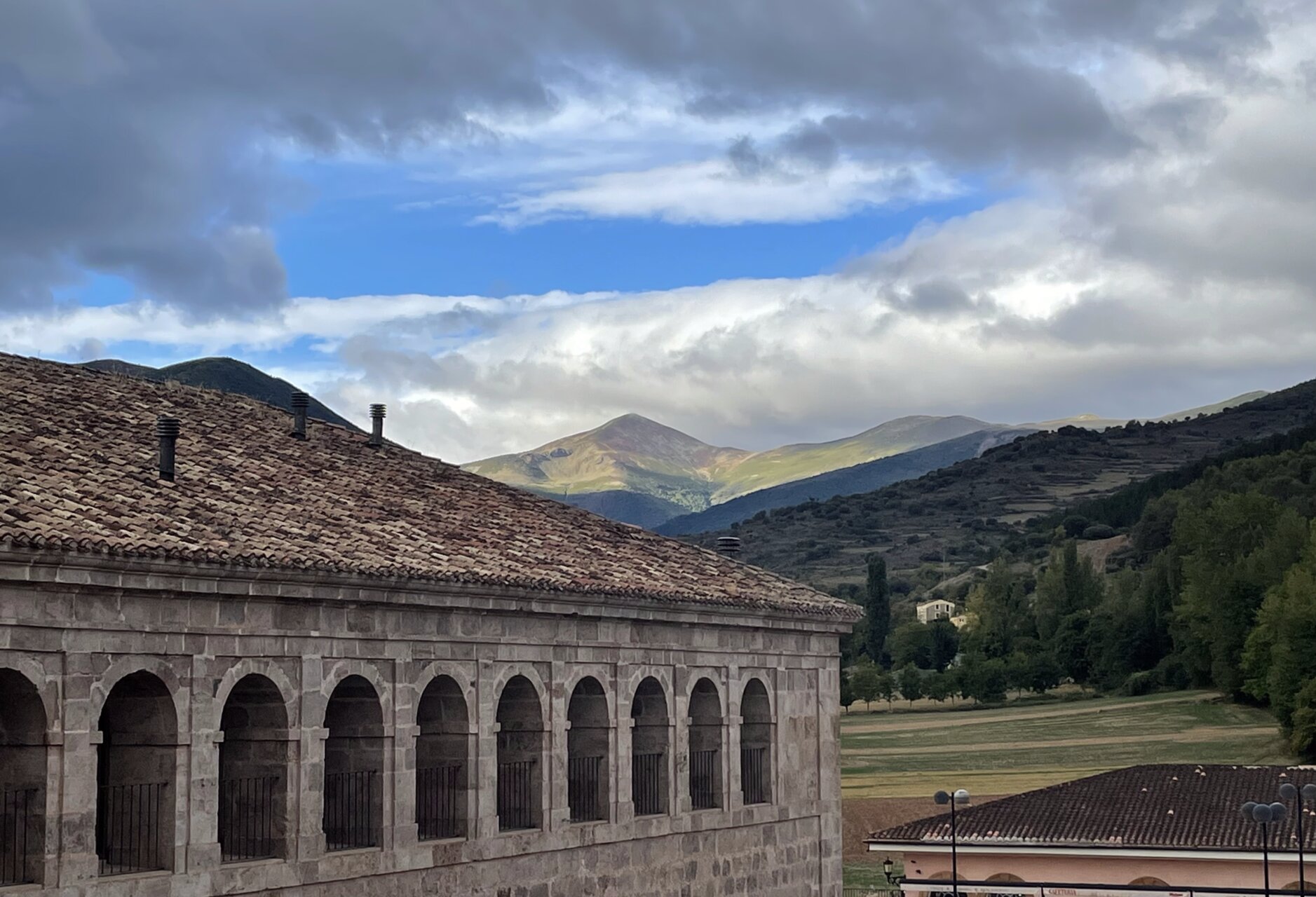
In 1503, King García Sánchez of Nájera commissioned the construction of the Yuso Monastery below Suso, to which the monks moved and which remains in use to this day. According to one tradition, the oxen pulling the cart carrying the remains of St Emilian, which the king wished to transfer to the monastery of Santa María la Real, stopped at a certain spot and refused to move on; for this reason, the king decided to build a new monastery at that very spot.
Most of the buildings date from the 16th to the 18th centuries.
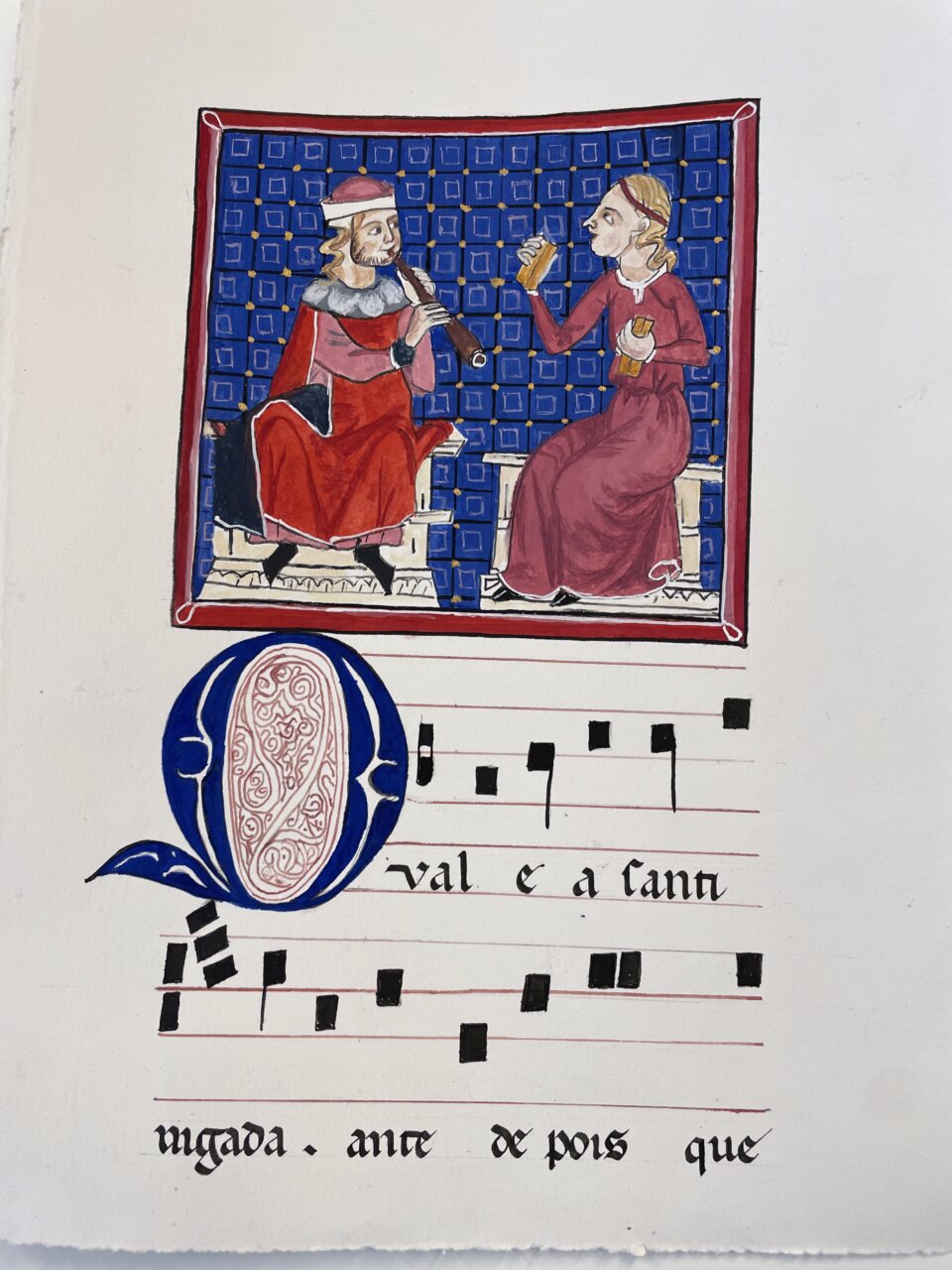
We were able to enhance our workshop with a visit to the library, which is one of the most important in the country, not only in terms of the number of documents it holds, but also their value and age (including around 300 documents dating from the 11th to the 15th centuries).
The monastery stood uninhabited for a time in the 19th century, but the monks eventually returned – this time Augustinians, who still live there today. Part of the monastery has been converted into a hotel, and the site is also home to the CILENGUA Centre for Spanish Language Studies. Today, the monastery attracts pilgrims on their way to Santiago de Compostela, although it lies somewhat off the official route from Nájera to Burgos.
An interesting addition to the workshop programme was exploring the La Rioja region, which is famous above all for its wine. This region of Spain is home to around 500 vineyards of international renown for the quality of their wine.
 back
back